Spine Surgery
Back pain is one of the most common health problems which lead visits of doctors and surgeons around the world. Common reasons for back or spine pain are long hours sitting, lack of physical activities or exercises, unhealthy weight and working habits. Spine surgeries are usually recommended when prescribed treatment medication and exercises fail in individual cases and when the quality of life is severely affected because of prolonged back pain.
Dr.Anil Solanki is a leading well experienced best spine surgeon in Ahmedabad. We start our treatment procedure with an investigation about the reason of back or spine pain. We always treat our patients with the best available option. There are different kinds of spinal surgeries which doctors may recommend after assessing the health and other related condition of a patient.
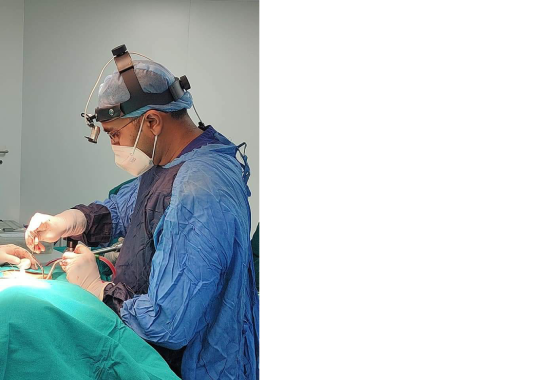
SOME OF THE SPINAL SURGERIES ARE THE FOLLOWING:-
Laminectomy
It is a widely recommended type of spine surgery for spinal conditions in case of spinal stenosis. This surgery involves removing part of the backbone, to relieve pressure on the spinal nerves. Laminectomy is usually performed in the combination of spine fusion surgery to correct instability of the spine.
Discectomy
It is a type of spine surgery which is used to treat a herniated disc in vertebrae. A disc separates two vertebrate and if it herniates inwards, it presses on spinal nerves, which causes pain. In this surgical procedure, all or part of the disc is removed.
Spine Fusion
Spinal fusion surgery involves joining two or more vertebrae together. This is done to prevent movement between adjacent vertebrae. Spine fusion is usually accompanied by spine instrumentation using various spine implants.
Spine specialist will choose best spine surgery treatment for a given pathology based on various factors. Choice of the procedure is based on site and magnitude of the pathology; patient’s overall medical health; spine surgeon’s preference based on his/ her training, surgical experience and available technologies etc.
Spine surgeries are safe in the current era due to latest advances in the last decade. Spine surgery provide instantaneous relief in carefully selected cases. Majority of procedures can now be done with a minimally invasive spine surgery technique, which is very safe and effective. Recovery after spine surgery is very quick. Patients can join routine activities and work within a short span of time after the surgery.
Cervical and CV Junction Surgery
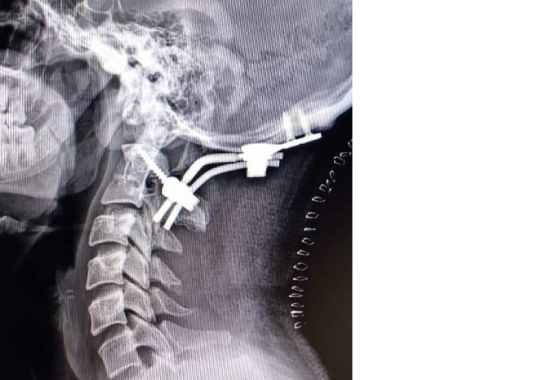
Cervical Spondylosis is a very common degenerative spine disorder. Mostly elderly people are affected; however, it can affect younger patients also. Anterior Cervical Fusion is gold standard procedure for these patients. Cervical spine is approached from the front. Anterior cervical fusion can be divided in 1) Anterior Cervical Discectomy and Fusion (ACDF), and 2) Anterior Cervical Corpectomy and Fusion (ACCF).
Anterior Cervical Discectomy and Fusion (ACDF): ACDF involves removal of cervical disc/ discs and reconstructing the space with a bone graft/ cage/ anterior cervical plate or a combination of these. This is procedure of choice when disc and osteophytes are bulging in spinal canal and causing pressure on spinal cord. A multilevel ACDF can be done depending upon the number of discs affected.
Anterior Cervical Corpectomy and Fusion (ACCF): ACCF involves removal of cervical vertebra/ vertebrae, either partially or completely. An ACCF is required when spinal cord is compressed behind the vertebral body, which cannot be approached by cervical discectomy. Some surgeon’s prefer doing an ACCF rather than multilevel ACDF to tackle multilevel cervical spinal cord compression.
Recent Advances:
- Stand Alone Cage: Conventionally, ACDF is done using a cage in interbody area from where disc is removed, which is supported by a plate applied on anterior surface of cervical spine. Plate can irritate oesophagus and other soft tissues in neck causing pain of swallowing in some cases. This is avoided by using a stand-alone cage as it is fixed by screws passing through the cage itself.
- Minimally Invasive Anterior Cervical Spine Fusion Surgeries: ACDF and ACCF can be done following minimally invasive spine surgery principles using specialized retractors and microscope.
- Disc Replacement Surgery: Cervical disc replacement is an alternative to ACDF, especially in young age patients. This will maintain motion at operated level and will reduce chances of adjacent segment degeneration(ASD).
Posterior Cervical Surgery:
- Posterior Compression: Presence of a posterior compression (with/ without associated anterior compression) usually requires posterior decompression procedures especially in multi-level cervical affection.
- Severe Cervical Instability: Patients with cervical spine fracture, spine infection and spinal tumors, might require additional posterior spinal instrumentation/ fusion addition to an anterior decompression and fusion procedure.
Minimal Invasive / Minimal Access Surgery
Traditionally, spine surgeries are done open, which means a surgeon uses long incisions, and there is a significant retraction of muscle to expose the spine; however, as technology has advanced; as a result, surgeons can now make smaller incisions to accomplish the same tasks.
With these smaller incisions, there's less trauma or disruption of the soft tissue around the spine, which typically results in less blood loss lower rates of infection and faster recovery.
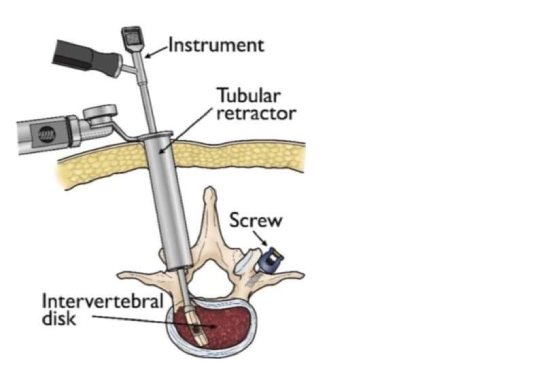
Microscopic spine surgery in Ahmadabad is most recent, advanced and safest and involves surgery under guidance of microscope with the help of special tubular cylindrical retractor instruments which enhance the safety due to the better magnified 3 dimensional visualization obtained due to microscopic assistance.
The indications for minimally invasive spine surgery are relatively similar to open surgery. Several conditions can be treated with this technique, such as:
- Stenosis which is narrowing around the spinal cord or nerve roots.
- Infections of the spine.
- Tumor.
- Diminished sensation to heat & cold.
- Instability in the spine which is the abnormal movement between bones which can be very painful.
Advantage of Minimally Invasive Spine Surgery
- Smaller incisions, so there's less disruption of the soft tissue around the spine patients.
- Less pain after surgery.
- Lower rates of infection.
- Patients can recover and get back to life quicker.
There are many different types of minimally invasive spine surgery, many different techniques that are used. All of these techniques share in common is a goal of minimizing injury to the muscle and ligaments around the spine.
In general, there are two types of minimally invasive surgery.
1. Decompression
- In this minimally invasive surgery, we remove bones or ligaments strategically, and in some cases, disk fragments.
- Compressing the spinal cord or nerve roots.
- A typical retractor is inserted down through the muscle and split the muscle fibers, and then we're able to work with long curved instruments through the retractor to accomplish the work.
2. Spine Fusion Surgery
In Spine Fusion minimally invasive spine surgery, surgeons try to decompress the nerves and spinal cord but also fusing or fixing the vertebrae together. This eliminates painful movement between the bones. With spinal fusion surgery, we typically have to place hardware into the spine, such as plates screws or rods, to eliminate the movement. In the lumbar spine, we remove the disk space, which is a gelatinous shock absorber between the bones, and after we remove the disk, we typically place a spacer in the disk space. This allows the bone to grow through the spacer and around the spacer together so that this part of the vertebra becomes a single bone.
Spinal Injections And Pain Management
Spinal injections are pain relieving procedures. A small mixture of steroid and local anesthetic is injected near painful pathology. Spinal injections immediately reduce pain by local anesthetic effect. Long term pain relief is provided by reduced inflammation caused by steroids.
Spinal injection can be of various types based on site and target pathology.
- Epidural Steroid Injection (ESI): A needle is inserted in the epidural space (area between dura and inner surface of vertebral arch) from a posterior approach. This procedure is suited for patients with spinal canal stenosis and multilevel lumbar pathologies.
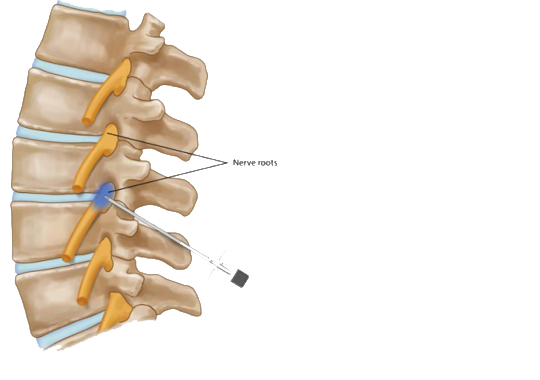
- Trans-Foraminal Epidural Steroid Injection (TFESI): A lateral approach is used to inject medicines in vertebral foramen. This procedure is done under fluoroscopy guidance to direct needle to correct level and site. TFESI is also called Root Block as it target a single root in the foramen. Multiple TFESI can be given for multilevel root compression. Primarily used for lumbar nerve roots, TFESI can also be given for cervical and thoracic nerves.
- Caudal Epidural Injection: This procedure is similar to epidural injection; however, site of entry for medicines is from sacral bone. This procedure is best suited for lower lumbar spine pathologies (L4-5, L5-S1).
- Facet Block: Mixture of local anesthetic and steroid is injected inside the arthritic facet joint or the nerve supplying the facet joint is anesthetized. This procedure is done under fluoroscopy guidance. Facet block is done for both lumbar and cervical spine.
Advantages of Spinal Injections:
- Spinal injections give immediate relief to patient’s symptoms.
- Spinal injections give long term relief due to anti-inflammatory effects of steroids.
- Spinal injections provide stepwise approach to patients suffering from spinal pathologies before deciding about the surgery.
- They help in confirming the diagnosis by assessing pain relief received after injection at the site of suspected pathology.
- Spinal injections help in postponing the surgery by providing required pain relief.
- They are helpful in providing symptomatic relief to patients where spinal pathology is either not obvious or not severe enough to require surgery.
Side Effects/ Limitations of Spinal Injections:
- They do not cure primary pathology. Pain might return after the effect of medicines is over.
- Steroids are contraindicated in patients with uncontrolled diabetes as they can cause infection at the site of injection and can increase blood sugar.
- Spinal Injections a (especially ESI) are contraindicated in patients on blood thinners. Injection needle can puncture small veins around the spinal cord and cause bleeding in the spinal canal. This can compress spinal cord and cause symptoms of spinal stenosis, which might require surgery.
In essence, spinal injections provide good symptomatic relief to the patient. They are a good diagnostic tool and are commonly used as a stepwise treatment for spine pathologies.
Spine Fracture Management
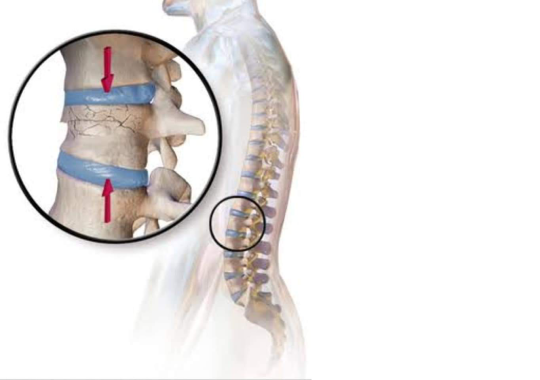
A spinal fracture (vertebral compression fracture) occurs when one of the bones in the spine fractures or collapses as a result of bone loss. Primary osteoporosis and menopause aren’t the only culprits when it comes to bone loss. Cancer, chemotherapy, radiation therapy, hyperthyroidism, and long-term use of corticosteroids also cause loss of bone mass and increase your risk for fracture.
SYMPTOMS
Back pain is a signal that something is wrong. Sudden onset of pain or a chronic, dull ache in your back could indicate that a spinal fracture has occurred. If you have back pain that lasts for more than several days, schedule a visit with your doctor so that the cause of your back pain can be determined and treated.
Spinal fractures can cause the bones in your spine to collapse, and as a result, height loss can occur. Multiple spinal fractures can also cause postural changes or a dowager’s hump. If you’ve lost height or you have a dowager's hump, you may have spinal fractures.
DIAGNOSIS
Report any new or unusual back pain to your doctor promptly. Early diagnosis can lead to more treatment options. A physical exam, together with an x-ray, can help determine whether you have a spinal fracture or not. If needed doctor may suggest you to undergo CT scan, MRI or DEXA scan.
Nonsurgical Treatment for Spinal Compression Fractures
Pain from a spinal compression fracture allowed to heal naturally can last as long as three months. But the pain usually improves significantly in a matter of days or weeks.
Pain management may include analgesic pain medicines, bed rest, back bracing, and physical activity.
Osteoporosis treatment. Bone-strengthening drugs such as bisphosphonates, teriparatide, calcium and Vit D help stabilize or restore bone loss. This is a critical part of treatment to help prevent further compression fractures.
Surgical Treatment for Spinal Compression Fractures
When chronic pain from a spinal compression fracture persists despite rest, activity modification, back bracing, and pain medication, surgery is the next step. Surgical procedures used to treat spinal fractures are:
- Vertebroplasty
- Kyphoplasty
- Spinal fusion surgery
Vertebroplasty and Kyphoplasty
These procedures for spinal compression fractures involve small, minimally invasive incisions, so they require very little healing time. They also use acrylic bone cement that hardens quickly, stabilizing the spinal bone fragments and therefore stabilizing the spine immediately. Most patients go home the same day or after one night's hospital stay.
Vertebroplasty. This procedure is effective for relieving pain from spinal compression fractures and helping to stabilize the fracture. During this procedure:
- A needle is inserted into the damaged vertebrae.
- X-rays help ensure that it's done with accuracy.
- The doctor injects a bone cement mixture into the fractured vertebrae.
- The cement mixture hardens in about 10 minutes.
- The patient typically goes home the same day or after a one-night hospital stay.
Kyphoplasty: This procedure helps correct the bone deformity and relieves the pain associated with spinal compression fractures. During the procedure:
- A tube is inserted through the back into the damaged vertebrae. X-rays help ensure the accuracy of the procedure.
- A thin catheter tube -- with a balloon at the tip -- is guided into the vertebra.
- The balloon is inflated to create a cavity in which liquid bone cement is injected.
- The balloon is then deflated and removed, and bone cement is injected into the cavity.
- The cement mixture hardens in about 10 minutes.
Spinal Fusion Surgery
Spinal fusion surgery is sometimes used for spinal compression fractures to eliminate motion between two vertebrae and relieve pain. The procedure connects two or more vertebrae together, holds them in the correct position, and keeps them from moving until they have a chance to grow together, or fuse.
Back Pain / Sciatica Management
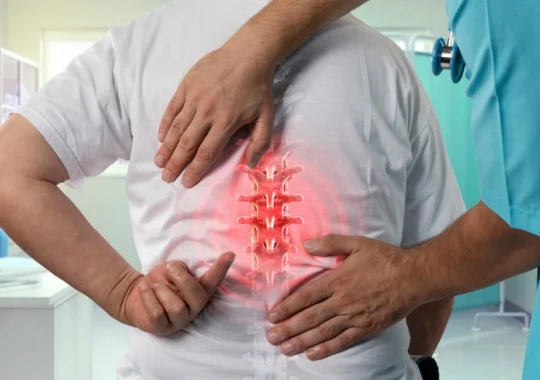
Pain in the back is not only a very common complaint but also is only second to common cold in sickness absent. It is believed that about 85% of general population will have at least one of back pain in their lifespan. If you have searching for pain specialist in Ahmedabad, Gujarat ? Dr Anil Solanki is well experienced pain relief doctor in Ahmedabad, Gujarat.
Majority of spine related symptoms are self-limiting. Best treatment for spine related problems is give time for the body to heal the pathology. A short course of bed rest, medicines, physiotherapy and activity restrictions cure 70-80% patients with neck pain and back pain. It is not necessary to visit a spine specialist at the very first onset of the symptoms. However, in following situations a spine specialist should be consulted:
- Pain not responding to medical treatment,
- Pain worsening despite being on treatment,
- Nerve compression symptoms (pain, tingling, numbness, loss of sensation in arms or legs; weakness in arms or legs; loss of control over urination or defecation)
- Pain associated with fever
- History of cancer
- History of injury/ trauma.
What are the Main Causes of Back Pain?
Strain
- Strain, injury or tension are the basic reason for the origination of back pain.
- Back pain is caused due to strained ligaments or muscles, muscle contraction or tension, damaged discs, injuries due to accident or fall, etc.
- A sudden or uncomfortable body movement, lifting heavy objects or wrong posture while lifting leads to strain.
Daily movement and body posture
- Daily activities or bad body posture can also contribute to back pain. Twisting, stretching beyond the limit, bowing down in awkward position, standing or sitting for an extended time causes back pain.
- Practicing a hunched sitting posture while using a computer or driving increases the risk of back and shoulder pain over time.
- Driving continuously for a prolonged duration even if not with a hunched posture is also a reason for back pain
- Extending the neck ahead while driving or using a computer may cause back pain
- Resting on a mattress which least supports the body & spine can initiate back pain.
Conditions
Few of the complications like disc herniation, osteoarthritis (spinal stenosis), spondylolisthesis, sciatica, ruptured disks, bulging disks, osteoporosis, cauda equina syndrome can cause back pain
Spine Infection
Having a high fever & mild warm portion on the back with back pain can be a result of spine infection.
Spine Cancer
A person suffering from spine cancer, experiences back pain. A tumor on the spine may push against a nerve, following in pain of back.
How is Back Pain Diagnosed?
After proper symptom analysis & thorough physical examination doctor may easily detect back pain.
- An X-ray, MRI, or CT scan can provide information regarding the state of the soft tissues & muscles in the back.
- Bone scans can identify bone tumors or fractures generated by osteoporosis The doctor may suggest a blood test to be sure if there is any infection.
- Back Pain Treatment Doctor in Ahmedabad is done by Dr Anil Solanki gives us different option Pain Medication: Typical pain medication used to treat lower back pain include acetaminophen Oral steroids, narcotic drugs and anti-depressants.
- Heat or ice: Application of a cold pack or heating pad can help relieve low back pain some people find that alternating between the two works best.
- Exercise: A program of back pain back exercise physical therapy will usually include combination of strengthening stretching and low impact aerobic exercise.